
Maria Camilla Capitani

Disability and libraries: tips for overcoming the most common barriers
Libraries can play a fundamental role in access to reading and participation in the cultural life of people with disabilities. The contribution starts from the needs of blind and visually impaired people to present tools, technologies, and solutions capable of promoting more autonomous use. Accessibility also concerns spaces, communication, and staff skills, transforming the library into a place of meeting, sharing, and belonging open to diverse audiences.
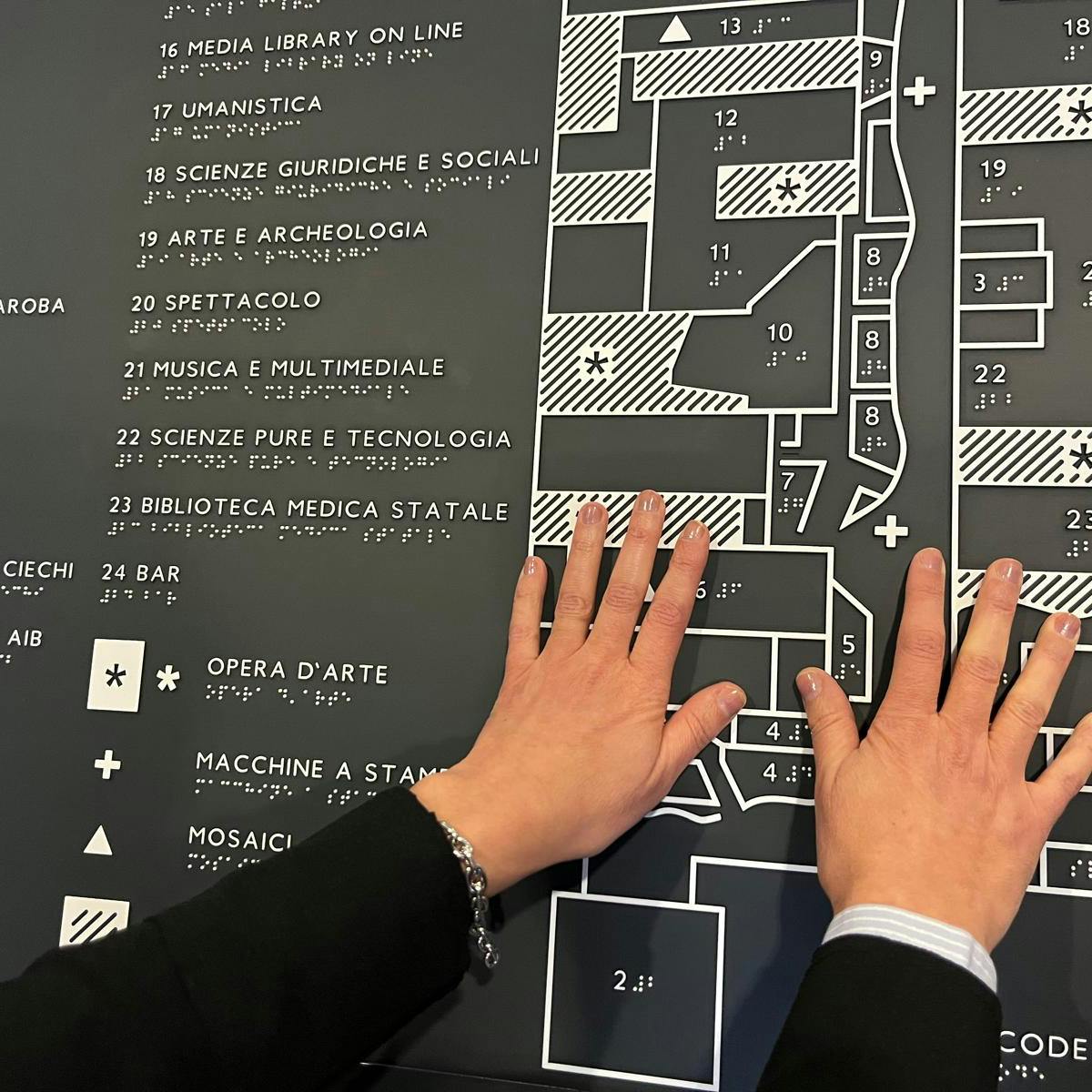
Accessibility to cultural heritage and visual impairment
The article analyzes cultural accessibility for people with visual disabilities, highlighting how an inclusive approach requires attention to all aspects of the experience, from reception to the tactile and visual perception of the works. The importance of tools such as tactile paths, maps and models, relief reproductions, braille captions, and QR codes with audio descriptions is emphasized, along with clear and detailed indications on language and orientation. The design must consider different visual conditions and individual needs, offering reasonable accommodations and personalized support. Essential is the direct involvement of people with disabilities in the design and evaluation of the paths. The goal is to ensure a meaningful, enriching, and accessible cultural experience for all visitors.