Accessibility of museums starts online
What a website cannot miss
by Marina Lo Blundo
What is the purpose of a museum's website?
This is the question that anyone who is about to design a museum's website (or archaeological Park) must ask themselves. Followed by another question: what can a user look for on a museum's website?
One of the main purposes of a museum website is to provide all the useful information a user needs to prepare their visit: always up-to-date opening hours and prices, address and useful contacts, directions on how to get there, at least bilingual version, are essential and basic elements, but not sufficient.
To understand how a museum website (which must comply with AGID guidelines on accessibility and inclusivity) should meet the needs of the user who wants to plan their visit, we must start from the principle, that is search engine indexing: the website must be able to appear as the first result shown by the browser, so as not to induce navigation on third-party and/or unofficial sites.
The homepage of the website must be clear and fluid, with a content hierarchy that enables the user to navigate comfortably (user experience). Besides the essential practical information already mentioned above, the museum's website must provide information related to routes and collections, integrating textual content with images, preferably galleries, and possibly videos.
Fundamental is real-time updating to report sudden closures or schedule changes, while it is desirable that the user can book their visit by purchasing tickets directly on the museum's or ticketing service provider's website, appropriately linked.
Very well built is the Visiter section of the Musée du Louvre website which, besides having a L’essentiel pour préparer vôtre visite section, has a FAQ section with the most frequently asked questions by users.
Precisely to prevent frequent questions, the Colosseum Archaeological Park website offers the chatbot Nerone that answers questions grouped into four categories: events, tickets, hours, itinerary. From here the user can start their online navigation on the Colosseum Park website, which, not by chance, calls itself 'the fifth site' of the Park, adding itself to the four physical sites open to the public.
Preparing a visit also means ‘studying’ or at least learning about the cultural place of interest. Therefore, a section about the museum's history and the formation of its collection (which for an Archaeological Park can be declined in the site's history from foundation to abandonment and the history of the excavations) and various in-depth sections should not be overlooked.
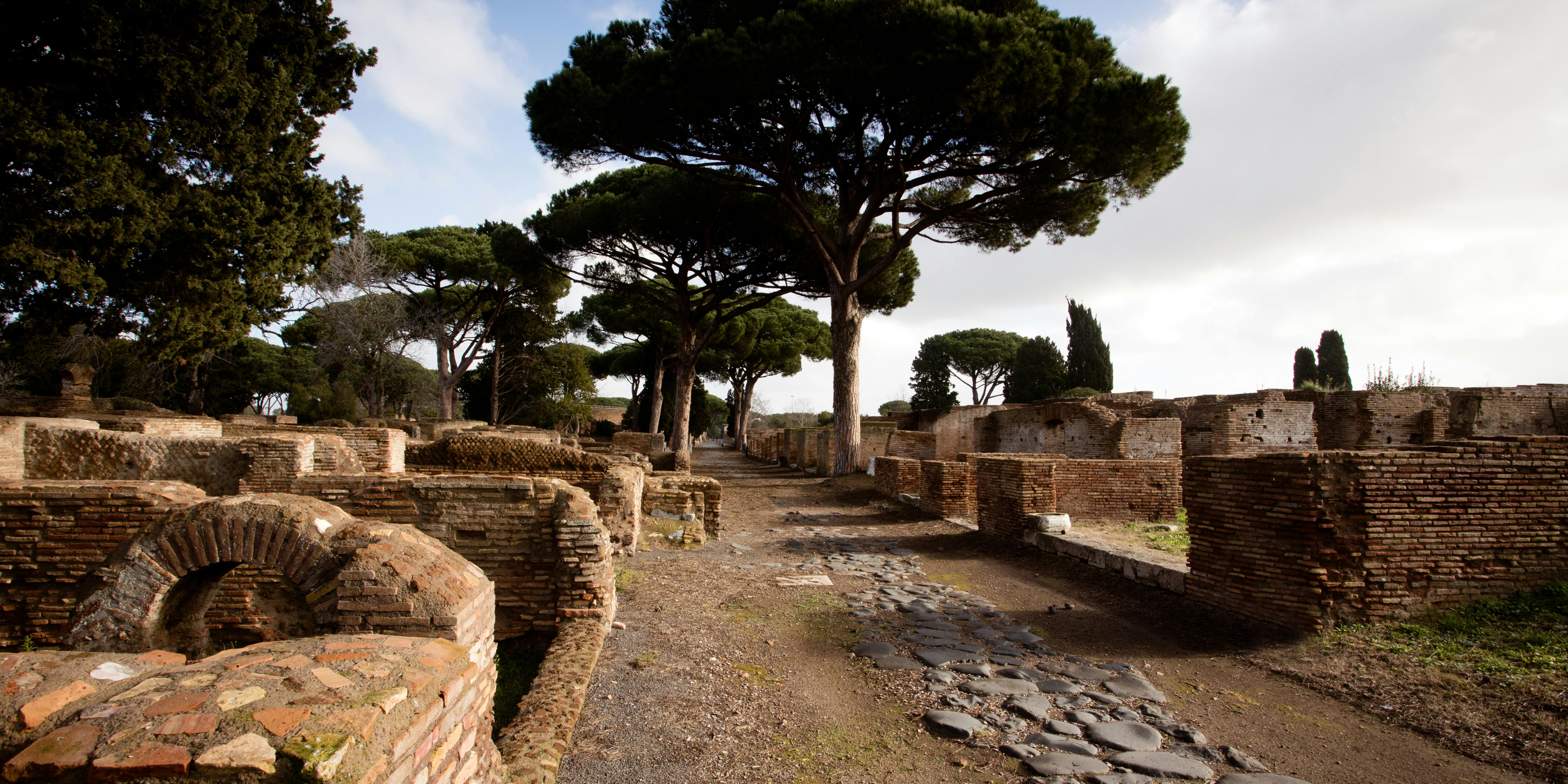
Not by chance, the educational panels section on the old Ostia Antica Archaeological Park website was the most visited section after the Opening hours and prices page: and precisely for this reason, even if not yet active, it will be implemented on the newly released website (summer 2025). The Ostia Antica Archaeological Park website also offers on the page dedicated to the Ostia Excavations a virtual tour of the archaeological area.
Speaking of virtual tours, the Museo del Prado website offers a series of virtual tours through which you can visit galleries and rooms, focusing on works whose images are returned in ultra-high resolution.
The virtual tour tool meets both the needs of those who want to prepare their visit in detail and those who cannot physically visit the museum – for reasons that can be geographical, primarily, but also economic or personal – but are equally interested in deepening their knowledge.
This direction is also reflected in the Museo del Prado's decision to make the entire collection available online, with a sheet for each work complete with description and image, for a total of 22,568 sheets.
In Italy, few museums have made their digitalized collections available online; basically for two reasons: on the one hand, the complete digitization of a collection requires a rather large economic and technical investment, which not all institutions can afford to budget; on the other hand, there is still some resistance to publishing ultra-high resolution images online, given a still effective ministerial directive that requires payment of a fee for the use of images by third parties, which conflicts with making such a digital heritage available to users.
Among Italian websites that have published their collection online is that of the Gallerie Nazionali Barberini-Corsini, which offers a full catalog searchable as a database with search keys by artist, period, location, type, or free search. The works' sheets contain essential data including references: an effective support for scholars.
Very well designed in terms of the depth of information it offers is the Museo Egizio di Torino website, which provides the collection, the Photographic Archive, the papyrus , and the digitalized inscriptions. Staying in Turin, the MAO – Museum of Oriental Art has published the entire catalog online: each work is accompanied by the relevant technical sheet.
Among small Italian museums, I note as virtuous the case of the Santi Furnari Archaeological Museum of Tripi, which has put its archaeological collection online, although the exhibited artifacts in this digital museum are not accompanied by an actual descriptive sheet.
An important section that cannot be missing on a museum's website is the one dedicated to education or Educational Services, both in terms of online resources and offers of activities for schools. Teachers must be able to find useful teaching materials on the website already to prepare classroom lessons and any information for booking physical workshops in the museum.
Regarding educational proposals, again the Museo Egizio di Torino dedicates a website linked to the main site specifically dedicated to educational activities both for schools and families.
The importance of developing an educational section on museum websites was particularly evident during the first COVID-19 lockdown in March 2020, when schools, closed, still needed distance learning; museums, also closed, could not deliver pre-booked physical workshops.
This is how it was born, for example, the project Ostia Antica for schools, in the form of video-workshops and video-lessons produced by the Ostia Antica Archaeological Park during the first lockdown precisely to meet the schools' needs in the area. The videos are still available on the Park's website in the Educational Services section together with other educational offers.
The London Museum's website dedicates a section to schools & communities, focusing heavily on community engagement, that is co-designing activities not only with schools but with distinct public targets. The educational offer is also very rich, including digital teaching materials made available to users (teachers and students).
Finally, a museum's website must provide information regarding accessibility. Museum accessibility starts online, both at the level of the site architecture and at the level of user experience, but it must also provide information about physical museum accessibility, so that all categories of potential visitors are able to check if and how they can make a visit.
The MAO of Turin website offers a wide section on accessibility, also presenting specific projects carried out together with Educational Services.
The PNRR – M1C3 Investment 1.2 Removal of physical and cognitive barriers in museums, libraries, and archives has financed many projects that often include the creation of accessible websites, but also various interventions on physical paths. Thus, these museums' websites should become the place where interested people can find useful info to organize their visit or online resources meeting their needs.
The Pompei for all program offers on the Pompeii Archaeological Park website a series of guides of the Park sites accessible to people with intellectual disabilities, in the Easy-to-Read or Augmentative and Alternative Communication (AAC) forms, with a tailored adaptation of content respecting specific needs.
A museum's website is the first meeting place between (potential) visitor and cultural site. The visit begins online already. From the pages of the website, its organization, the choice and quality of the content the museum shows itself welcoming to all audiences.