language
Towards accessible cultural institutions
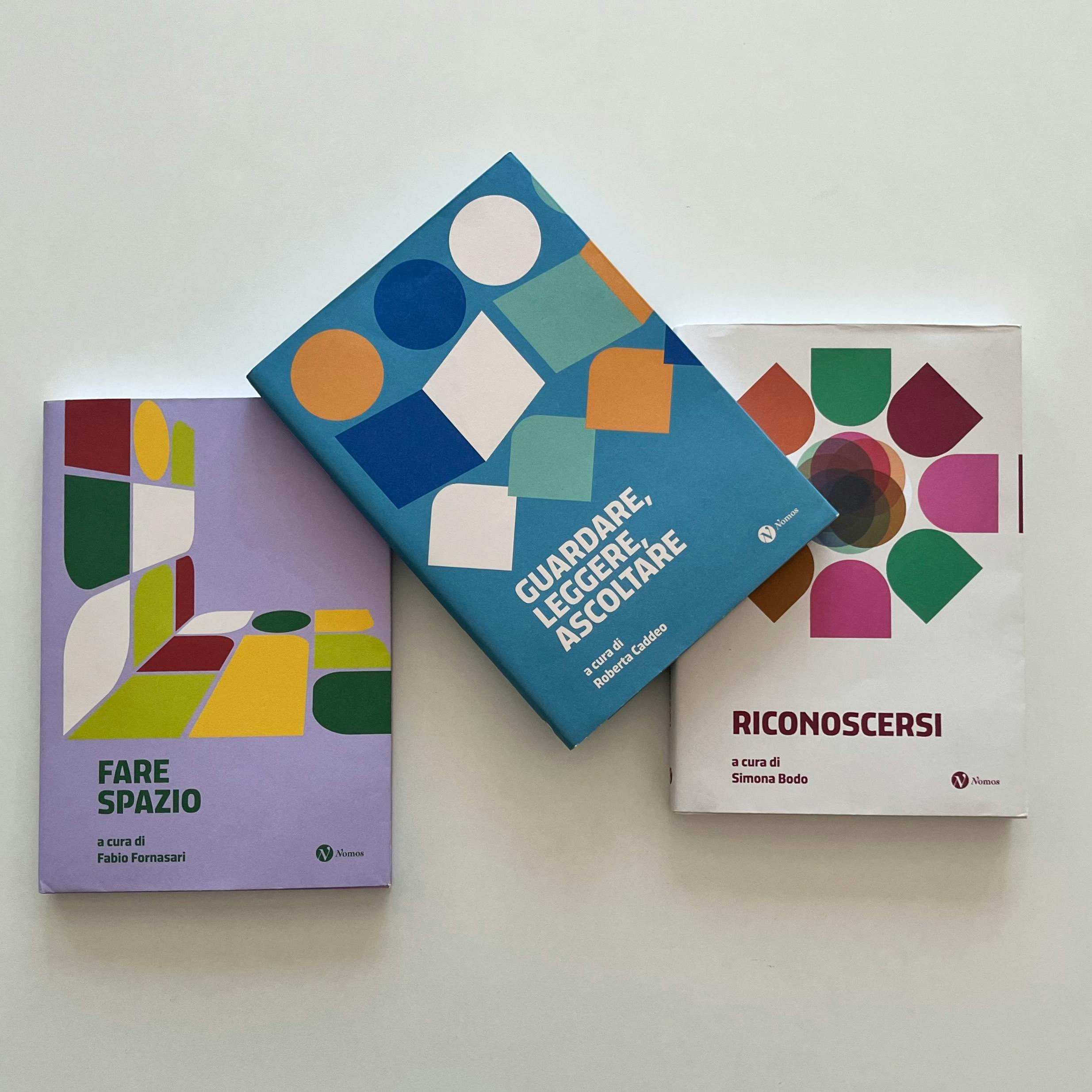
A collection of three volumes is available in bookstores published as part of the Personeper program. Accessibility in cultural places. An editorial proposal, curated by Anna Chiara Cimoli and Domenico Sergi, which contributes to the public debate on cultural accessibility addressing museums, archives, and libraries as spaces of rights, participation, and social development.
Through foreign contributions translated into Italian for the first time, original contributions specially commissioned, and an array of illustrations, the publications each tackle a macro-issue — space, language, representation — from a perspective transversal to the different cultural places.
Accessibility, participation and well-being of trans and non-binary people in museums
The article highlights a gap in the debate on cultural accessibility in Italy, namely the limited attention given to the inclusion and well-being of trans and non-binary people in cultural institutions. In response, the document Musei e Generi, promoted by ICOM Italia, provides an ethical and methodological framework to support trans-inclusive museum practices. Based on qualitative research and the direct involvement of communities, the document addresses key issues such as language, governance, education, and participation. Accessibility is redefined as a systemic process that permeates all institutional dimensions, in alignment with the principles of Equity, Diversity, and Inclusion. In a context marked by political and cultural tensions, the contribution underscores the role of museums as active spaces for rights, recognition, and social transformation.
Thin places: the fairy tale as the golden key to accessibility
This article proposes the use of fairy tales as an interpretative and design tool for accessibility in museums and cultural venues. Through concrete experiences, it demonstrates how the fairy tale structure – comprised of thresholds, stages, and transformations – can guide inclusive and multisensory exhibition itineraries. Fairy tales thus become a tool capable of integrating different languages (visual, corporeal, and auditory), facilitating audience comprehension and emotional engagement. From this perspective, accessibility is not simply the removal of barriers, but a cultural and ethical practice that enhances a plurality of perceptions and narratives. Finally, the symbolic and political dimension of fairy tales opens up alternative visions of society, promoting justice, reciprocity, and social transformation.
Easy to Read: improving accessibility in cultural places and beyond
The article presents the Easy to Read language as a textual simplification tool designed to make information accessible to people with reading difficulties, particularly those with intellectual disabilities. After illustrating its origin and principles, the text describes the main guidelines for writing: simple vocabulary, short sentences, clear structure, consistent use of images, and readable layout. The validation process is also explained, which directly involves people with intellectual disabilities in verifying communicative effectiveness. The article highlights the value of Easy to Read in cultural venues, where it can be applied to captions, guides, and orientation information. In this perspective, linguistic simplification becomes not only a technical tool but also an inclusive practice that recognizes the universal right to understand information.
From publishing to museums: natively accessible content for cultural sites
The article analyzes accessibility as a right and as systemic responsibility, in light of the UN Convention and the European Accessibility Act. The accessible publishing model promoted by Fondazione LIA demonstrates the effectiveness of a coordinated ecosystem, proposed as a reference also for museums.
Cultural participation? It is (still) a privilege
The text analyzes the social and cultural barriers that in Italy limit access to cultural life, considered a citizenship right and a form of community relationship. Beyond physical, economic, or territorial obstacles, symbolic and ritual signals especially weigh, making culture perceived as an elitist space, excluding those who do not master its codes. The dominant cultural imagery, not very representative of the diversity present in the country, marginalizes stories and memories of underrepresented groups, particularly people with migratory backgrounds. The text presents examples of intercultural and community practices that reduce these barriers by making museums and libraries shared and participatory places. For these changes to become structural, long-term policies based on participatory governance, linguistic plurality, and redistribution of cultural power are needed. The final challenge is to redefine the 'we' of Italian culture, recognizing diversity as a resource and condition for a broader cultural democracy.
Accessibility of museums starts online
The article explains which sections of a cultural site's website make a possible visit to the site welcoming and accessible.