Towards accessible cultural institutions
Space, language, representation in three volumes of Nomos edition • an initiative by Personeper
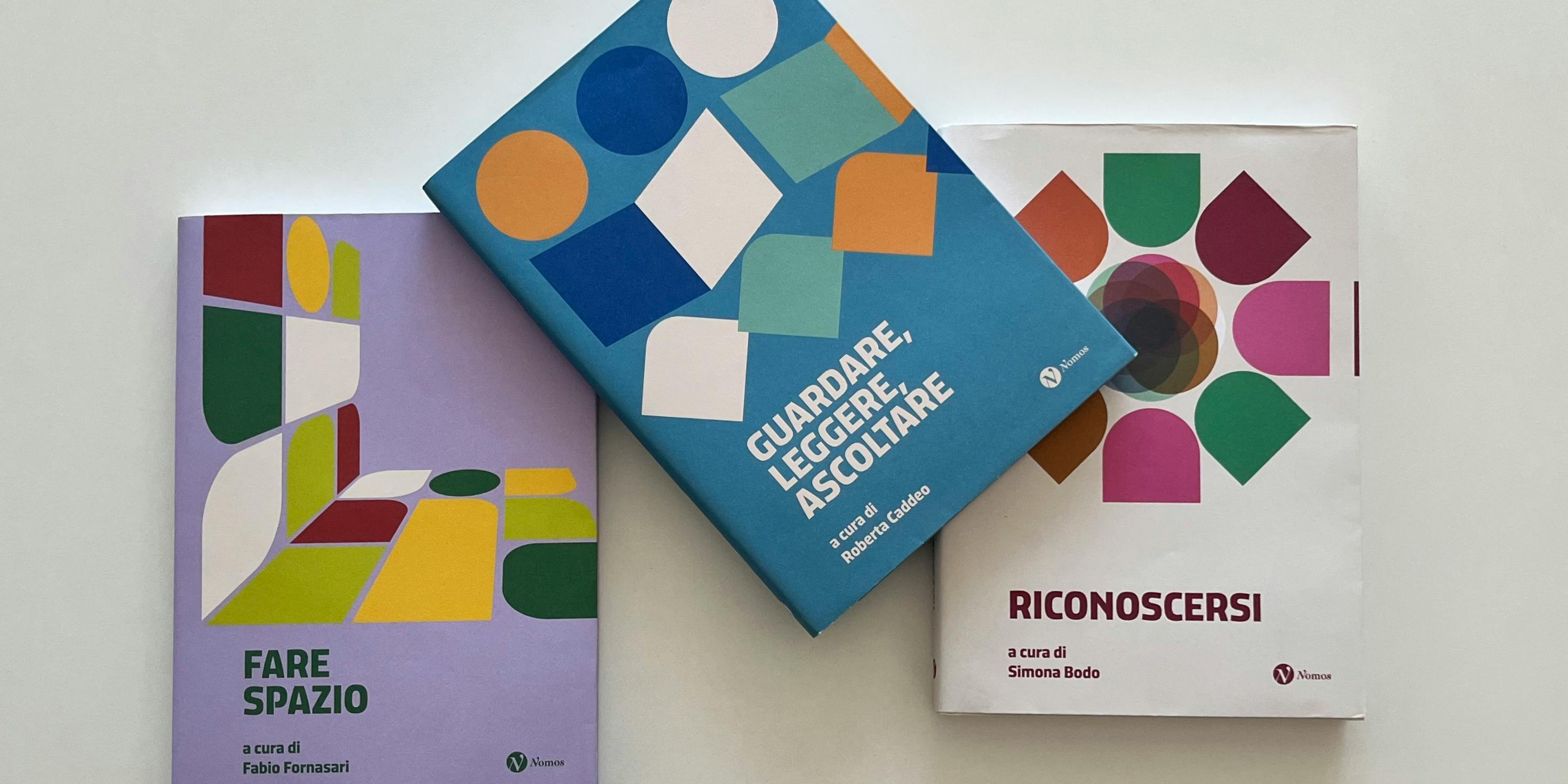
It is available in bookstores Peopleper. Towards accessible cultural institutions, the editorial series in three volumes published by Nomos editions within the program Peopleper. Accessibility in cultural places, the national training plan born to reduce physical, sensory and cognitive obstacles and barriers in participation in cultural heritage.
Alongside training actions, also initiatives of research, deepening, dissemination, Peopleper. Accessibility in culture contributes to the public debate on cultural accessibility with an editorial proposal capable of addressing delicate issues that speaks to cultural places as spaces of rights, participation, and social development.
The series
The series aims to stimulate theoretical reflection as much as to accompany the daily practice of those working in museums, archives, and libraries to transform cultural institutions into fair, open, and supportive spaces.
Edited by Anna Chiara Cimoli and Domenico Sergi, the editorial project is structured around three themes — space, language, representation — each entrusted to the curatorship of an expert. Each of the three volumes hosts a selection of foreign contributions never translated before, essays commissioned ad hoc, and a corpus of interviews with representatives of third sector organizations or activism that collaborate with cultural institutions. Authors proposing perspectives, sometimes unusual, on the theme of accessibility, always able to question established practices and imagine other possibilities. The volumes are accompanied by the illustrations by Giulia De Amicis.
The three volumes
Making space. The collective/social construction of space, edited by Fabio Fornasari, addresses "making space" in cultural places not as the design of physical environments, but as a relational, sensory, and collective process. Theoretical contributions traverse multidisciplinary perspectives, from the concept of space as a presence endowed with its own agency to practices that rethink museums, archives, and libraries as spaces of co-construction of meaning and democratic participation.
Looking, reading, listening. Possible writings: towards accessible cultural institutions, edited by Roberta Caddeo, starts from the observation that the language with which cultural places communicate is never neutral: it constructs worlds, defines belongings, and produces access thresholds. The contributions explore linguistic inclusion as a transversal design responsibility of the institutions, which involves communicative choices in their symbolic, cognitive, and relational dimension.
Recognizing oneself. Bias, representation, participation: towards accessible cultural institutions, edited by Simona Bodo, addresses the role that museums, archives, and libraries can play in counteracting economic, social, and symbolic inequalities. Through theoretical essays, field experiences, and voices of participatory practices, the volume proposes to rethink cultural places as open, plural, and transformative spaces, capable not only of representing society but also of contributing to making it fairer.
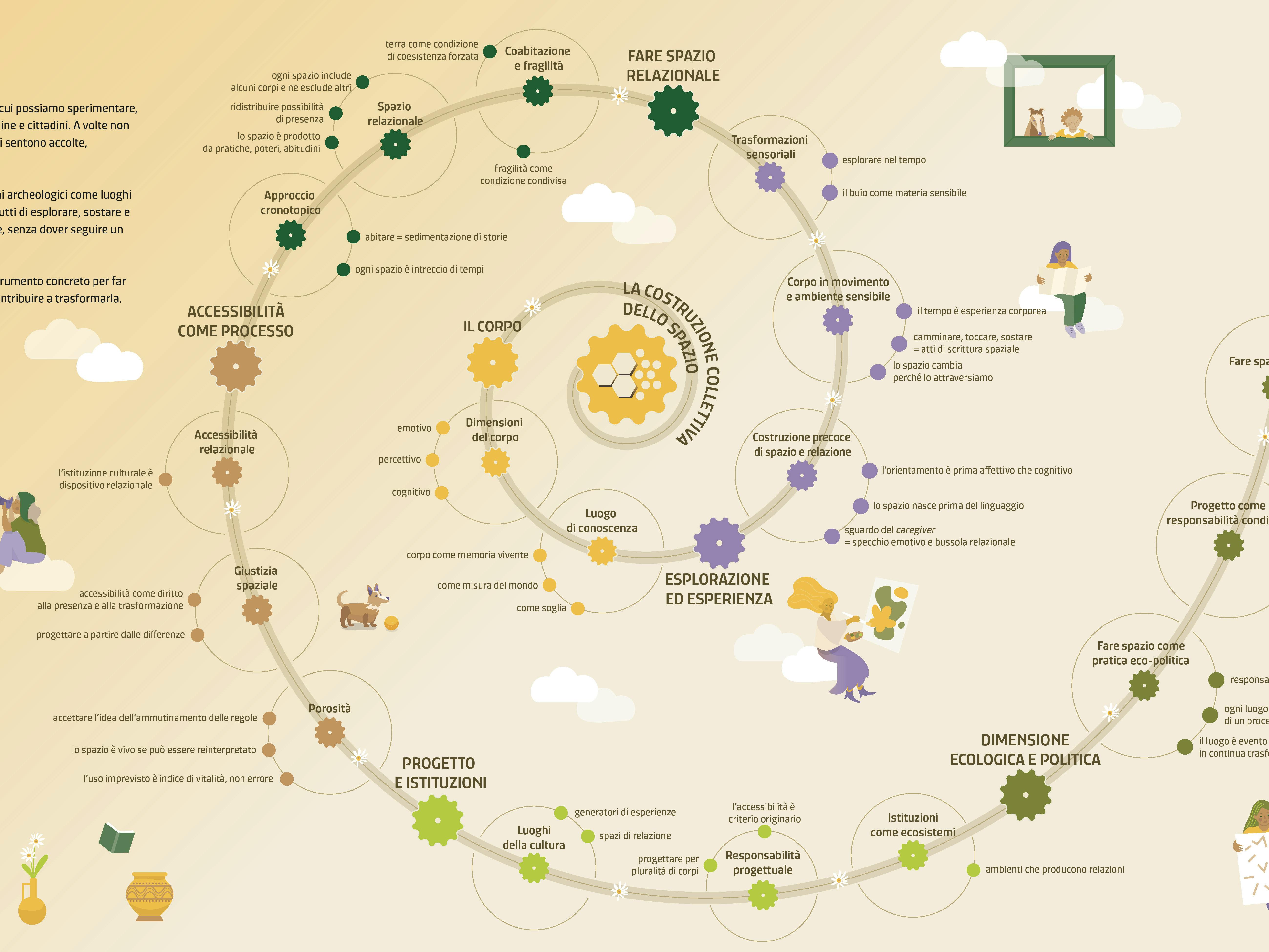
Volume "Farfare space": conceptual map
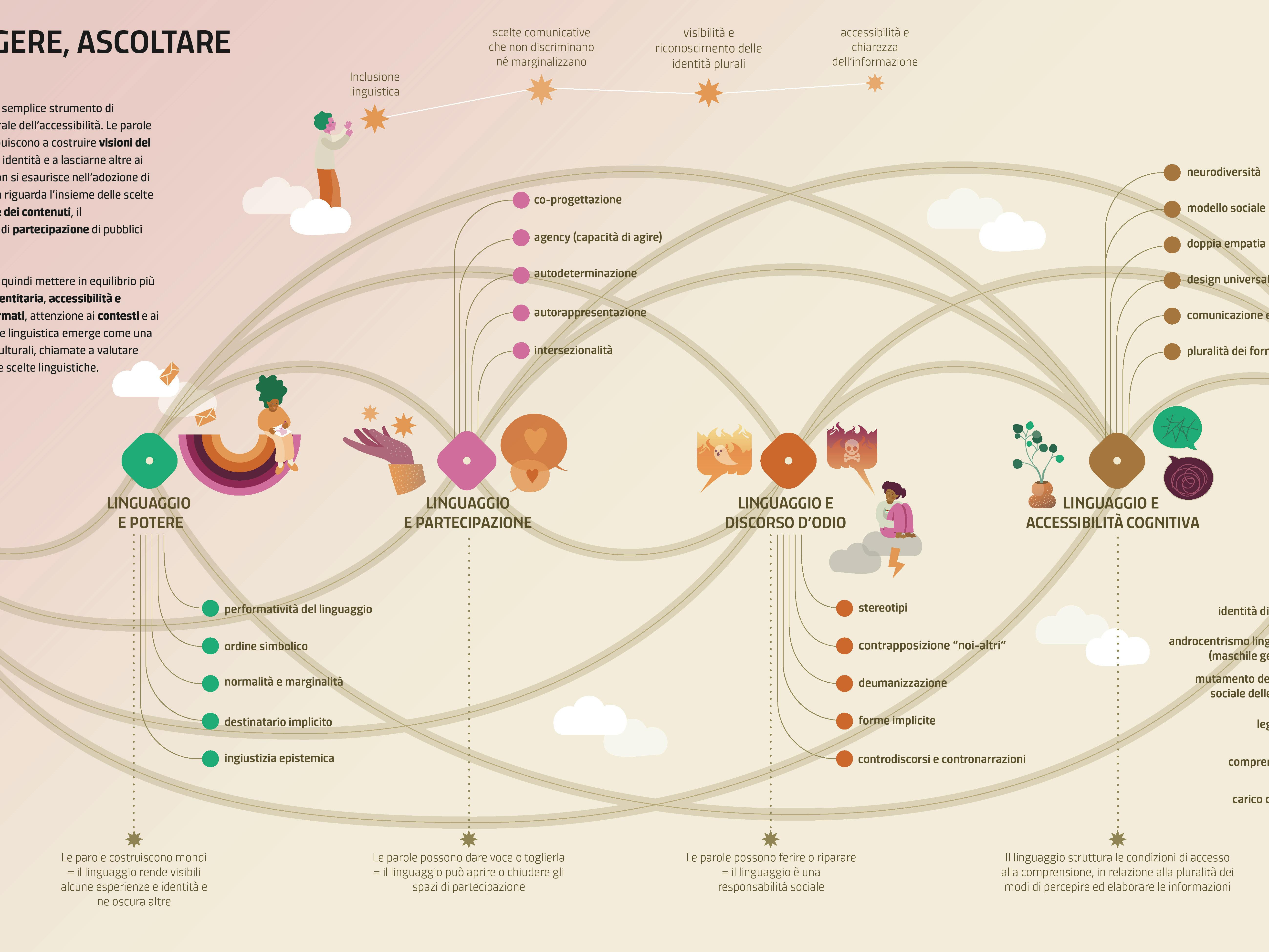
Volume "Watch, read, listen": conceptual map
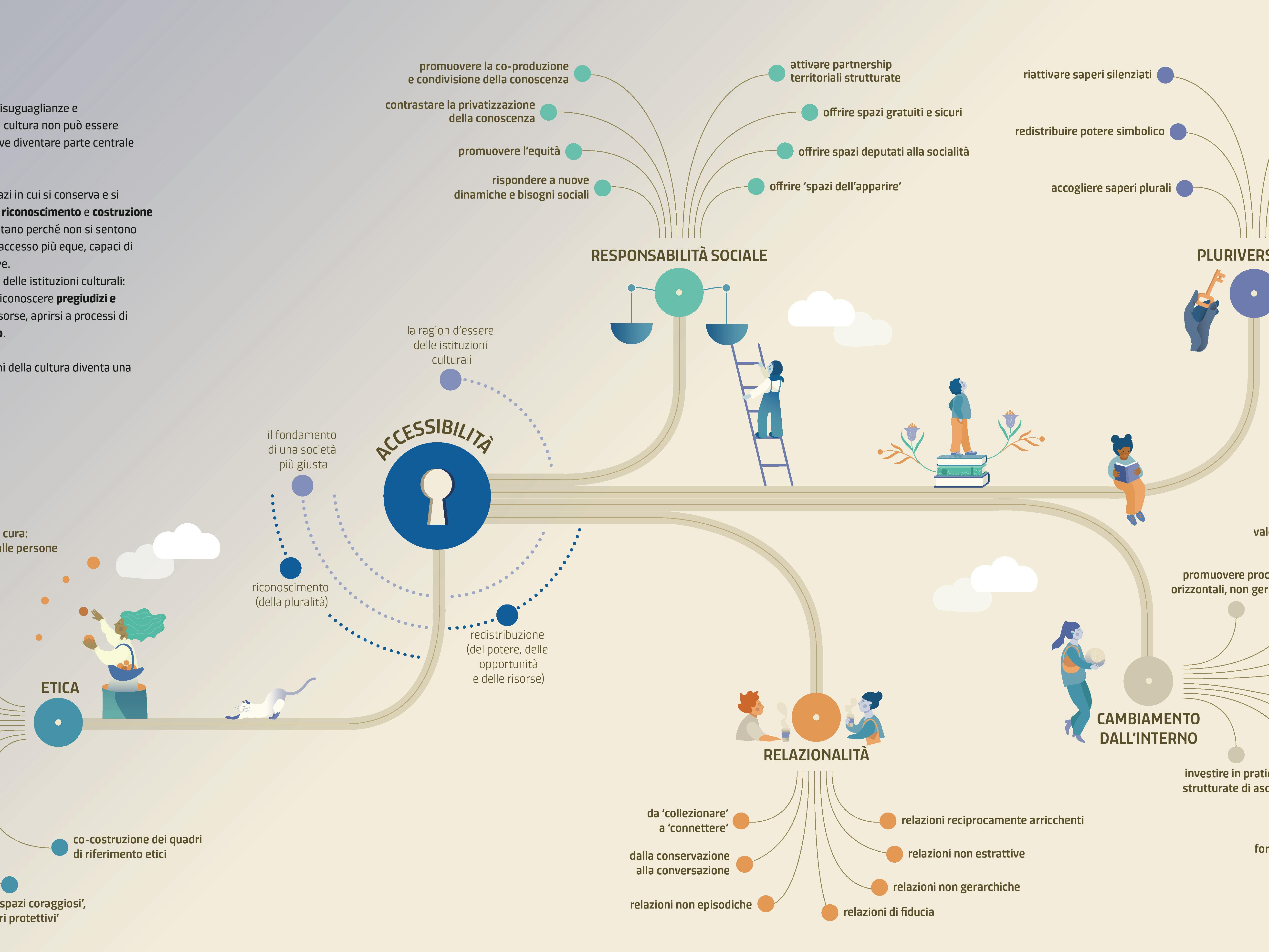
Volume "Recognizing Oneself": conceptual map