Thin places: the fairy tale as the golden key to accessibility
On transforming the museum experience into a narrative journey
by Elena Zagaglia
Everything is a symbol, childhood knows it instinctively: at night it keeps with itself a teddy bear, ancestral protection of the allied bear in the cave against the dangers out there; it plays ball, that is, it plays with the sun; it swings, and thus experiences the continuous alternation of up and down, of high and low, of life and death. If ‘fictions’ are food for our mind and gym for our soul (Jonathan Gottschall says it well in his The Storytelling Animal: How Stories Make Us Human), we can choose which ones we consider best for our nourishment, which we like to savor the most, which are our comfort food.
A storyteller usually comes from far away, from another world. The storyteller usually makes an initial gesture, lights a lamp; and there is a final gesture they make, blowing out the lamp. Outside there is the moon. «Whatever remains at the end of the story, it is the gift to work with, to use for crafting the soul». (Pinkola Estés 1993, p. 457)
It is in this interval between lighting and extinguishing the lamp that we can tell what for about a year now we have been experimenting on together with Miriam Mandosi: working with the fairy tale as a key for accessibility in museums and cultural places. Two are the experiences we have so far passed through: the exhibition at the Museum of Civilizations Fairy Tales Are True… Italian Popular Stories (until March 1, 2026) and ___ The Large Glass at Maxxi (until October 25, 2026), and two are the fairy tales we have created: Elio and the Great Tale of Traditions and The Big Blue. The starting point concerns how the structure and themes of the fairy tale world can offer us an innovative key to create museum paths even more accessible to all.
Fairy tales, thanks to Italo Calvino, «contain a general explanation of the world»; they are not simple stories for children, but historical and anthropological documents, a «catalog of destinies that can befall a man and a woman» (2015, p. 167). They reflect and transform cultural reality, infused with specific elements resulting from the «daily and hidden work» (ibid.) of generations of storytellers. Their intrinsic ability to organize the narrative in significant and transformative stages, characterized by fixed schemes, mandatory passages, and recurring motifs, proves to be an effective tool to explore cultural contents and give shape and meaning to a path.
One of the elements central for us is the concept of threshold: a point of passage between different worlds, the threshold represents a moment of initiation, transformation and growth. Thresholds can be physical, like an enchanted forest, or symbolic, like the passage from childhood to adulthood; now, within an exhibition or a museum path, the thresholds between different sections can be used to mark the path, emphasizing moments of change and discovery: each section becomes a passage that introduces visitors to a new context, inviting them to reflect on the meaning of transformations. These passages are crucial, often marked by an initial «damage or lack» that gives specificity to the story.
And here the concept of threshold is inextricably linked to accessibility; just as fairy tale characters must cross thresholds to reach their goals, accessibility aims to overcome the barriers that prevent certain people from fully enjoying an experience; using the fairy tale means considering the museum path itself as a sequence of thresholds to cross.
And making these thresholds easily passable for all is the essence of accessibility in our context; this goes beyond the removal of architectural barriers: it means using different languages and formats like sign languages (Italian and American), visual vernacular, braille, easy-to-read and AAC inviting the public, publics, to get involved and discover new sensitivities and new approaches.
The fairy tale itself can then be seen as a praise of thresholds – and of their crossing, and the fairy tale journey thus reflects in the museum experience:
- the beginning of the journey: entrance into the museum, crossing the first symbolic threshold;
- the narrative stages: the different sections of the exhibition, each a new thematic context;
- the encounters and discoveries: the works, objects, stories that unfold;
- the challenges and transformations: the need to understand new or complex concepts, interaction with the contents that brings a new awareness, a growth. We learn along the way, we become ‘guardians’;
- the return: leaving the museum, returning home carrying the acquired wisdom and a transformation that took place.
The fairy tale suggests to us that understanding the world and its magic is often found in nourishing oneself with different languages; a crucial point for accessibility is indeed that of language, and the fairy tale in its essence is a master of languages, going beyond words.
The journey of Elio and that of Dora, the protagonists of the two fairy tales crafted for the exhibitions, are woven with encounters with beings communicating in unconventional ways: marmots talk, salt guardians sing to accompany their work, Elio himself communicates with nature by playing his flute, a call that animals and plants seem to understand and respond to; the earth has a language understood by listening to its breath, and the seeds are fragments of memory waiting for their story to be told; the actions of the reapers are a ritual revealing meaning through jokes, pranks and witticisms, a communication happening through the body, sound, ritual; puppets reflect on their role as observers and commentators of human events (bringing back to the heart What Are Clouds?).
Dora’s journey explores yet other languages and passes through subtler and more diverse channels: she meets her double, a figure with deep sea-colored skin suggesting that identity itself is fluid and can be perceived as a living image floating between reality and fiction; she discovers that the sense of smell is a path to memory, that clouds are ancient witnesses carrying the memory of the sky, and that some stories do not need ink or solid matter to be real but live in the secret of the skin.
This narrative mode therefore trains openness to multiple forms of communication and perception, and for this reason can be a powerful tool for facilitating an exhibition: its archetypal and universal structure is particularly suited to outline the exhibition path, creating a coherent and recognizable progression.
Using the fairy tale to explain the exhibition then means:
- offering a key to understanding the cultural reality it reflects and transforms; narration becomes an additional way to give shape and meaning to the path;
- presenting the contents as significant and transformative stages; each threshold-section introduces a new thematic context, inviting reflection on the meanings of transformations;
- guiding the visitor through the path in an engaging and progressive manner, revealing step by step the secrets and promises contained in the story and the exhibited works;
- linking complex concepts to concrete narratives, encounters with symbolic characters, places and objects that serve as cognitive anchors.
These elements transpose and explain the museum contents in an evocative, emotional and memorable way; archetypes present in fairy tales speak of all of us, and for this reason we can feel involved in the narration; a museum path structured as a fairy tale not only guides through the contents, but emotionally engages, promotes active reflection on the world and using different languages ensures that everyone, regardless of their abilities or background, can cross these thresholds and participate in the story.
There is a deep ethical foundation if we read the fairy tale as a narrative that opens up other possibilities compared to lived reality (Bacchilega, Greenhill 2025, p. 8); one of the golden keys, a fundamental contribution to the vision of the fairy tale as a tool of social and political transformation comes from the sociologist and economist Peter Kammerer, who in his article The Fortune of Gianni (1998) transforms the famous Grimm brothers’ story into an alternative economic-political proposal; analyzing the figure of Gianni – who trades a large piece of gold for a horse, then a cow, a pig, a goose and finally a worn wheel that ends up at the bottom of a well – the author highlights an economic paradox: despite Adam Smith’s theories, Gianni achieves ultimate happiness through a series of unequal exchanges. While classical economists would see him as a madman squandering wealth, Gianni seems from this perspective a person oriented in a concrete and earthly sense, whose resoluteness consists in tending to what is immediately possible.
The core of this analysis lies in the distinction between exchange value, represented by gold and money, that is the realm of calculation, orderly conduct of life and the spectrum of a civilization that represses immediate pleasure, and use value, represented by the direct pleasure of riding, drinking fresh milk or sleeping on a feather pillow – «the pleasure given by the possibility of simple doing» (ibid, p. 4); it is here, according to Kammerer, that true happiness may reside.
Is it a suggestion of happy degrowth? In any case these stories are not just mere escapism, but represent a true dream of justice capable of opposing logics of profit, supremacy and exclusion (Oziewicz 2015, in Bacchilega, Greenhill 2025, p. 4). Accessible fairy tales can thus act as a powerful engine of cultural welfare, as they activate the so-called ‘(world) narrative thinking’ (storyworld thinking) allowing to speculate on life models governed by rules of interdependence and reciprocity; this approach transforms the museum experience into a path of recognition, where those historically silenced can rethink their own story (restorying), reaffirming their own existence in a reality that in its dark side tries to suffocate subordinate voices (ibid, pp. 28-29).
In this perspective, accessibility is not just the removal of architectural barriers, but a practice of cu(ltu)re that uses different languages to honor the fairy tale’s ability to communicate on multiple levels, layers and senses; adopting the fairy tale as a conceptual frame allows considering the museum space as a holistic ecosystem, where the well-being of the person is linked to their personal, emotional and social connection to the proposed stories and where they can find space for their own.
This approach can then challenge anthropocentrism and promote a deep relationality between human and non-human, offering visions of sustainable futures not based on domination but on mutual care. Thus, the fairy tale can become a golden key that not only opens the doors of knowledge but acts as a tool of active transformation, making wonder and amazement universal rights and catalysts for social change and thus expanding the space of the threshold, of the limit, to discover its potential: «an extension of the possible» (Bacchilega, Greenhill, 2025, p. 159).
Catalog of destinies (Italo Calvino), economic-political alternative (Peter Kammerer), «atlas of life and word» for Cristina Campo (2014, p. 103): fairy tales are subtle places that help make us more human, where there is space for everyone.
We would also like to venture an image, the fairy tale in the museum as a prism: it reflects existing cultural reality and breaks it down into new colors and possibilities, allowing anyone and everyone to look through it to imagine a fairer world - and what use is all this if we don’t mention Gaza and Palestine - and then live it, walking their own words, indeed, their own stories.
We extinguish the lamp, outside there is the moon.
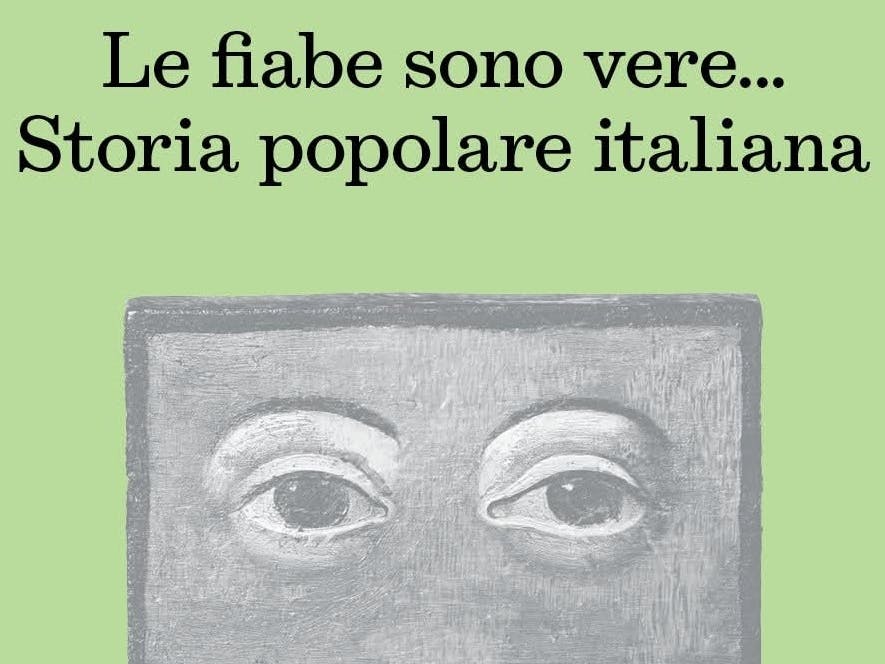
Poster of the exhibition Fairy tales are true, MUCIV, Rome.

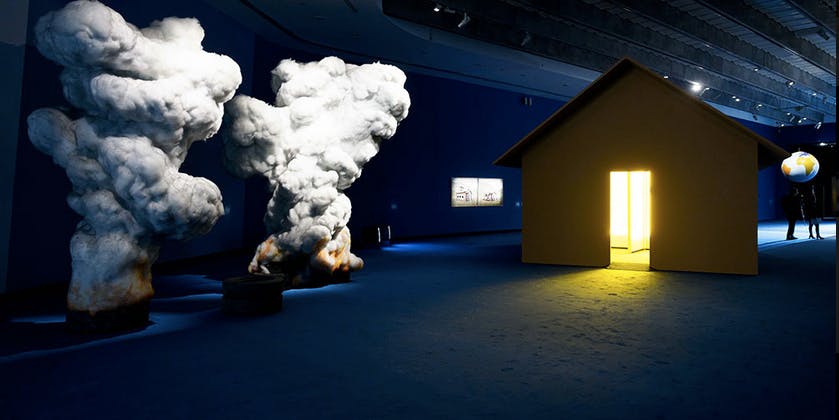
Exhibition headline The Large Glass, MAXXI, Rome.
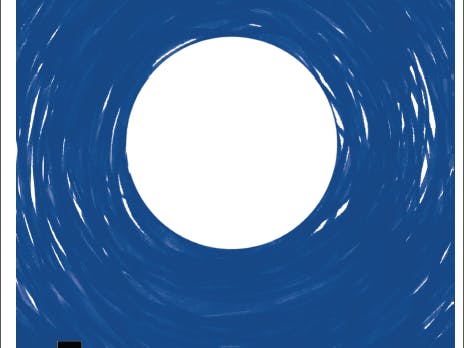
Cover of the fairy tale The Big Blue.
To learn more
Bacchilega C, Greenhill P., Justice in 21st-Century Fairy Tales and the Power of Wonder, Bloomsbury Publishing Plc, London, 2025
Calvino I., On Fairy Tales, Mondadori, Milan, 2015
Campo C., The Unforgivable, Adelphi, Milan, 2014
Gottschall J., The Storytelling Instinct. How Stories Made Us Human, Bollati Boringhieri, Turin, 2012
Kammerer P., Gianni's Fortune, in Against Time. Forms of Experience in Modernity, year III, October 1998 pp. 1-4
Pasolini P.P., What Are Clouds, in Italian Caprice, 1968
Pinkola Estés C., Women Who Run with the Wolves, Frassinelli, Milan, 1993